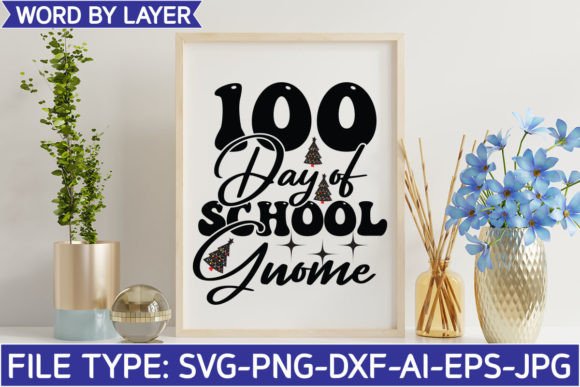
100 Day of School Gnome SVG: An Embroidery Review
As a professional embroidery designer and product reviewer, I approach every new digital asset with a critical eye toward stitchability. When evaluating the 100 Day of School Gnome Svg, my primary concern is not just how cute the graphic looks on a screen, but how it translates into thread on fabric. This design arrives as a comprehensive digital download including SVG, PNG, AI, and EPS files, which immediately signals versatility for both vector cutting and digitizing software. However, for those of us in the machine embroidery space, the true test lies in converting these graphics into a durable, high-quality embroidered patch or apparel decoration that withstands the rigors of school life.
First Impressions and Visual Personality
The 100 Day of School Gnome Svg captures a specific niche mood that resonates deeply with teachers, parents, and students. The aesthetic is playful yet structured, balancing the whimsy of gnome imagery with the celebratory milestone of reaching 100 days. From a design perspective, the silhouette appears clean, which is a positive indicator for future digitizing. Cluttered vectors often result in muddy embroidery, but this graphic seems to offer distinct separation between elements like the hat, beard, and numerical text.
For an Etsy seller or small shop owner, this visual personality is marketable. It strikes the right balance between trendy and timeless within the education niche. When I look at this file, I see immediate potential for custom apparel and classroom merchandise. The inclusion of a 300 DPI transparent PNG is particularly useful for creating printable mockups to list finished products before you have even stitched a single sample. This allows creative entrepreneurs to gauge customer interest and secure pre-orders for personalized gifts without upfront production costs.
Real-World Application: The Teacher Sweatshirt Test
To truly evaluate this asset, I mentally placed it in a real-life production scenario: creating a custom crewneck sweatshirt for a first-grade teacher celebrating this milestone. Sweatshirt embroidery presents unique challenges due to the fleece texture and fabric stretch. Using the 100 Day of School Gnome Svg as a base for digitizing, I considered how the design would perform on this specific substrate.
In this application, the design serves as an excellent candidate for an applique design rather than a full-fill stitch motif. By utilizing the SVG layers to create precise cut lines, you can incorporate fabric scraps from the teacher’s classroom theme colors, reducing stitch count significantly while adding tactile value. A full fill stitch version of a detailed gnome could result in a bulletproof patch that distorts the soft fleece. Instead, using the vector paths to guide satin stitch borders and running stitch details ensures the handmade product remains soft and wearable. This approach elevates the perceived value of the commercial embroidery project, making it a premium boutique item rather than a generic craft fair product.
Navigating Fabric Limitations and Hoop Constraints
While the 100 Day of School Gnome Svg is versatile, practical judgment dictates where it should be used with caution. Not all fabrics are created equal, and this design requires strategic placement. On textured fabrics like terry cloth towels or heavy canvas tote bags, fine details in the gnome’s face or small "100" typography may get lost. In these cases, I recommend simplifying the design assets during the digitizing process, perhaps enlarging the text or removing intricate facial features to maintain stitching clarity.
Stretchy fabrics, such as performance tees or lightweight knits, demand rigorous stabilizer protocols. Because gnomes often have vertical orientation, there is a risk of fabric pull if the stitch density is too high. When adapting this embroidery file for baby clothes or lightweight shirts, consider resizing the design to fit a smaller hoop size to minimize distortion. Always test on scrap fabric first. Dark fabrics also present a challenge; ensure your thread colors provide sufficient contrast against the garment, as the original digital colors may not translate directly to available embroidery thread palettes.
Curved surfaces like caps require special attention. If you intend to use this design for hat embroidery, verify that the aspect ratio fits within your cap frame limits. You may need to adjust the layout of the SVG layers in Adobe Illustrator before importing it into your embroidery software to prevent registration issues on a curved surface.
Professional Standards and Business Value
For digital product sellers and apparel decorators, consistency builds trust. Using high-quality source files like the included AI and EPS formats ensures that your final embroidered patch or printed transfer maintains crisp edges regardless of scaling. Blurry designs suggest amateur workmanship, whereas sharp, well-digitized outputs from the 100 Day of School Gnome Svg communicate professionalism. This directly impacts buyer engagement and customer satisfaction.
Furthermore, having layered SVG files allows for color customization without redrawing the entire image. If a client requests a purple hat instead of red for their personalized gift, you can modify the specific layer instantly. This efficiency is crucial for small business owners managing multiple custom orders during peak seasons. The ability to rapidly adapt design assets for different grade levels or school colors transforms a single purchase into a scalable product line.
Critical Designer Notes for Success
Before loading this design into your machine or listing it in your shop, adhere to these practical guidelines to ensure a successful outcome:
- Verify Licensing: Confirm whether your purchase includes commercial rights for selling finished physical products versus digital files. Never assume usage terms; check the provider's specific license agreement.
- Digitize with Intent: Do not rely on auto-digitizing features. Manually assign stitch types—satin stitch for outlines, fill stitch for large areas, and running stitch for detail—to optimize the embroidery project for durability.
- Test Stitch Density: Run a sew-out on the exact fabric you plan to use. Adjust density settings to prevent puckering on thin materials or gaps on thick fabrics.
- Mockup Realistically: Use the 300 DPI PNG to create realistic previews, but ensure the digital representation matches what your machine can actually produce. Misleading mockups lead to returns.
- Check Small Details: Inspect tiny lettering or accents. If text is smaller than 4mm in height after resizing, it may not stitch clearly. Modify the vector art to thicken these elements before digitizing.
- Stabilizer Selection: Match your stabilizer to the fabric weight and design density. Cut-away stabilizer is generally safer for stretchy apparel featuring this gnome design to maintain shape over time.
Final Thoughts on Production Viability
The 100 Day of School Gnome Svg represents a strong foundation for seasonal inventory. Its strength lies in its adaptability across various crafts and graphics applications, from nursery decor to holiday embroidery. However, its success as a finished product depends entirely on the maker’s technical execution. By respecting fabric limitations, optimizing stitch parameters, and leveraging the provided vector formats intelligently, you can transform this digital download into a profitable, high-quality offering that delights teachers and families alike. Remember, in our industry, the best design is one that stitches as beautifully as it displays.