Teacher Tribe SVG File: A Designer’s Stitch Test
When evaluating a new digital asset for my embroidery business, I look beyond the screen preview to imagine how lines will translate into thread. The Teacher Tribe SVG File arrives as a versatile digital download cutting file, included in a zipped folder containing SVG, DXF, EPS, and PNG formats. While these vector formats are primarily designed for vinyl cutting and sublimation, they serve as an exceptional blueprint for digitizing custom machine embroidery designs. As a professional reviewer and maker, I approach this graphic not just as clip art, but as a potential centerpiece for custom apparel, personalized gifts, and small shop products that need to withstand both washing and customer scrutiny.
First Impressions and Visual Personality
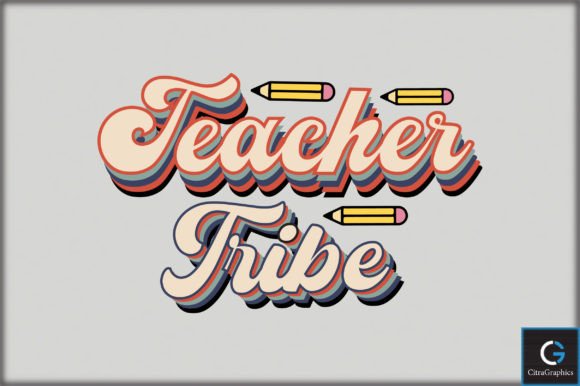
Opening the Teacher Tribe SVG File reveals a design that balances playful enthusiasm with clean readability. The mood is instantly recognizable to anyone in the education sector; it feels communal, proud, and spirited without being overly juvenile. For an embroidery designer, the layout suggests immediate potential for sweatshirt embroidery or tote bag designs. The typography appears bold enough to support satin stitch columns, while the graphical elements offer opportunities for fill stitch textures or applique design techniques.
What stands out immediately is the scalability provided by the vector format. Because this is a true graphic asset rather than a raster image, I can resize it for a 4x4 hoop size baby bib or expand it for a large teacher appreciation blanket without losing edge definition. This clarity is vital when planning stitch paths. Ambiguous edges in low-resolution files often lead to jagged stitching or excessive underlay, but the crisp lines here allow for precise digitizing. The visual personality strikes the right note for commercial embroidery projects targeting school staff, homeschool groups, or education-themed Etsy sellers who need merchandise that looks professional yet handmade.
Real-World Application: The Custom Sweatshirt Test
To truly judge this design, I mentally placed it in a real-life production scenario: creating a batch of custom crewneck sweatshirts for a local elementary school’s staff appreciation week. In this context, the Teacher Tribe SVG File needs to perform on fleece-backed cotton, a fabric with significant texture and loft.
For this project, I would treat the main text as a primary focal point using dense satin stitches to ensure the letters pop against the fuzzy fabric texture. The accompanying graphics could be executed as an applique design to reduce overall stitch density, keeping the garment soft and wearable. This is where having the EPS and SVG source files becomes invaluable; I can separate the layers to assign different stitch types manually. If I were using this for a tote bag design instead, I might opt for running stitch outlines combined with fill stitches to create a vintage, collegiate aesthetic that appeals to teachers looking for understated style.
The versatility extends to smaller items as well. I can envision this design adapted for embroidered patches to be ironed onto denim jackets or backpacks. The bold shapes inherent in the Teacher Tribe SVG File make it ideal for patch borders, ensuring the merrowed edge has a solid foundation to grip. For holiday embroidery projects, such as personalized ornaments for classroom volunteers, the PNG format serves as a perfect reference for color matching thread colors to specific brand palettes or school mascots.
Navigating Fabric Challenges and Technical Limits
Despite its versatility, no design is immune to physics. When adapting the Teacher Tribe SVG File for embroidery, caution is required on certain substrates. Stretchy fabrics like performance tees or ribbed knits present a challenge for detailed graphics. If the design contains intricate interior details, they may distort during stitching unless adequate stabilizer is used. I recommend testing on scrap fabric first, specifically using a cutaway stabilizer for stretchy materials to maintain registration between the outline and fill areas.
Small hoop sizes also demand careful editing. While the vector file scales infinitely, thread does not. Reducing this design below three inches wide may cause tiny lettering to become illegible or result in needle breaks due to excessive stitch density in confined spaces. In such cases, I advise simplifying the design assets by removing secondary decorative elements and focusing solely on the core "Teacher Tribe" message. Similarly, textured fabrics like terry cloth towels require a water-soluble topping to prevent stitches from sinking into the pile, which would obscure the fine details of the graphic.
Dark fabrics introduce another variable. The high contrast required for visibility means you must plan for white underlay or light-colored base layers. The Teacher Tribe SVG File likely relies on color blocking for definition; when stitched on black cotton, those internal color distinctions vanish unless recreated with thread. Always test your digitized version in black and white mockups before committing to production to ensure the silhouette remains strong regardless of background color.
Elevating Product Value and Brand Consistency
For Etsy sellers and craft business owners, consistency builds trust. Using a cohesive graphic like the Teacher Tribe SVG File across multiple product lines creates a recognizable boutique branding identity. When customers see the same high-quality motif on a cap, apron, and pillow cover, it signals professionalism. However, the transition from digital graphic to finished product dictates perceived value. A poorly digitized version with gaps, puckering, or uneven satin stitch widths will devalue the item instantly.
Investing time to properly digitize this file pays off in buyer engagement. High-quality stitch-outs photograph better, leading to superior printable mockup presentations and listing photos. When a customer receives a personalized gift where the embroidery feels smooth and looks intentional, it reinforces the premium nature of handmade goods. Furthermore, because this file includes multiple formats, it supports hybrid businesses; you can use the SVG for vinyl decals on tumblers and the digitized version for textile products, maintaining visual continuity across your entire catalog.
Critical Designer Notes Before You Stitch
Before loading this design into your machine or listing it in your shop, adhere to these practical checkpoints:
- Verify Licensing: Confirm whether your purchase includes commercial rights for selling finished physical products versus digital embroidery files. Never assume usage rights based on file format alone.
- Digitize Responsibly: Remember that the Teacher Tribe SVG File is a cutting file, not a pre-digitized embroidery file. You must convert it using embroidery software or hire a professional digitizer to create stitch data.
- Check Stitch Density: Avoid over-compensating for fabric texture by making stitches too dense, which causes bulletproof stiffness. Adjust pull compensation settings based on your specific stabilizer and fabric combination.
- Test Contrast: Run a sample on both light and dark backgrounds. Ensure thread colors provide sufficient contrast for readability, especially for any script or thin line work.
- Validate Hoop Compatibility: Measure the final intended size against your machine’s maximum sewing field. Resizing vectors is easy; resizing stitch files after digitization can distort aspect ratios and stitch angles.
- Inspect Small Details: If adapting for baby embroidery or small accessories, verify that all internal cutouts and negative spaces remain open after stitching. Closed-up details ruin legibility.
The Teacher Tribe SVG File represents a strong foundation for creative entrepreneurs in the Crafts and Graphics space. Its clean geometry and thematic resonance make it a reliable candidate for everything from commercial embroidery runs to heartfelt personalized gifts. By treating this digital download as a starting blueprint rather than a final destination, and by applying rigorous testing protocols during the digitization phase, makers can transform these vector lines into durable, beautiful textile art that truly honors the teaching community. Success lies not just in the file itself, but in the thoughtful execution of every stitch.