Who Runs the House Cats: A Designer's Review
As a professional designer and product reviewer, I approach every new graphic with a specific question: will this actually translate into a high-quality finished product? When evaluating Who Runs the House Cats, my focus shifts immediately from digital aesthetics to physical application. While this asset is listed as a Teacher SVG design intended for Cricut Explore and Silhouette Design users, its bold typography and illustrative elements make it a prime candidate for adaptation into a machine embroidery design or mixed-media project. For craft business owners and Etsy sellers, understanding how this graphic behaves on fabric is just as important as how it looks on a screen.
First Impressions and Visual Personality
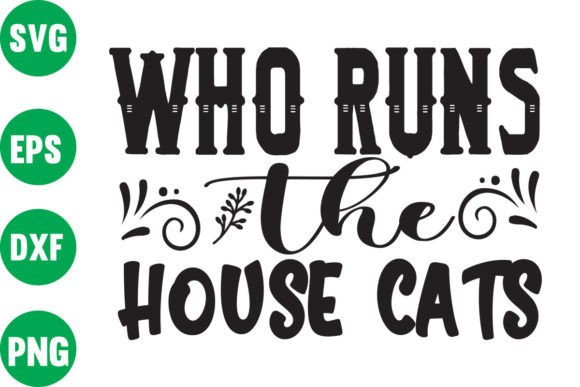
The mood of Who Runs the House Cats is instantly recognizable to anyone who has owned a feline. It strikes a balance between humor and affection, avoiding overly cutesy tropes in favor of a relatable, slightly chaotic domestic vibe. From a design perspective, the layout appears balanced enough to serve as a central focal point on custom apparel or home decor. The phrase itself acts as a strong anchor, suggesting that the lettering should be treated with as much care as the accompanying cat graphics.
For those working in the Crafts category, this design offers significant versatility. It does not feel like a seasonal novelty item; rather, it has evergreen appeal for pet lovers. As I review the vector lines, I am mentally converting them into stitch paths. The shapes are distinct, which is crucial when translating Graphics into thread. Ambiguous lines often lead to muddy embroidery, but this design seems to offer clear boundaries that would work well for either satin stitch outlines or fill stitch interiors. This clarity is what ultimately builds customer trust in a handmade product.
Real-World Application: The Sweatshirt Test
To truly evaluate this asset, I envision a specific real-life scenario: creating a premium crewneck sweatshirt for a small shop product line. Sweatshirt embroidery requires careful planning because fleece fabrics can swallow fine details. In this context, Who Runs the House Cats would need to be sized appropriately to maintain legibility without becoming too dense or stiff.
If I were producing this for an Etsy listing, I would likely pair the text with a simplified cat silhouette using an applique design technique. This reduces the overall stitch density, keeping the garment soft and wearable while adding a tactile, professional element that pure vinyl printing cannot achieve. The contrast between the smooth fabric of the applique and the textured fleece creates a high-value perception. For a personalized gift, such as a holiday embroidery project for a cat-obsessed aunt, this design hits the perfect emotional note. It feels bespoke rather than mass-produced, provided the execution respects the fabric's limitations.
Navigating Fabric Challenges and Hoop Sizes
While the design is versatile, it demands respect for material constraints. If you are adapting this SVG into a digital embroidery file, you must consider where it will live. On structured items like caps or embroidered patches, the text size becomes the limiting factor. Tiny lettering that looks crisp in vector software may turn into illegible thread clumps when stitched at 4mm height. Always verify your minimum text size against your machine’s capabilities before committing to a production run.
Textured fabrics like terry cloth tea towels or waffle-knit blankets present another hurdle. The pile can push through running stitch or thin satin stitch borders, making the design look messy. In these cases, using a water-soluble topping stabilizer is non-negotiable. Conversely, on stretchy knits used for baby embroidery or lightweight tees, excessive stitch density can cause puckering. You may need to edit the file to reduce underlay stitches or switch to lighter fill patterns. Dark fabrics also require testing; ensure your thread colors have enough contrast so the humor of "Who Runs the House Cats" isn't lost in shadow. A white or cream outline often helps lift the design off black garments.
Commercial Viability and Brand Consistency
For creative entrepreneurs, consistency is key to brand recognition. Using Who Runs the House Cats across multiple products—tote bags, mugs, and cushions—creates a cohesive collection. However, the translation between mediums must be seamless. A tote bag design can handle heavier coverage and larger hoop sizes, whereas a key holder requires extreme simplification. If you sell digital product previews or printable mockups, ensure they accurately represent the final texture. Customers appreciate honesty in presentation; showing a realistic render of thread on fabric manages expectations better than a flat digital image.
This design also lends itself well to commercial embroidery projects for local businesses, such as veterinary clinics or pet grooming salons. Staff uniforms featuring this witty slogan can humanize a brand and spark conversation with clients. In these professional settings, durability matters. Ensure your stitch type selection accounts for frequent industrial washing. Satin stitches generally hold up better than complex fills over time, and securing all jump stitches prevents unraveling. Professionalism in finishing is what separates a hobbyist output from a viable business asset.
Essential Pre-Production Checklist
Before you load this design into your machine or cutter, adhere to these practical designer notes to avoid costly mistakes:
- Test on Scrap Fabric First: Never stitch a final product without a test run. Use the exact fabric and stabilizer combination you intend for the finished piece to check for registration issues or tension problems.
- Verify Licensing Terms: Although the description mentions use for various projects, always confirm whether the license permits commercial sale of finished physical goods versus digital files. Protect your business by reading the fine print.
- Check Thread Color Contrast: View your color palette in grayscale to ensure readability. What looks vibrant on screen might lack definition in thread form.
- Review Stitch Density: If digitizing from the SVG, avoid over-digitizing. Heavy designs distort fabric and break needles. Aim for efficiency and drape.
- Confirm Hoop Size Compatibility: Measure your design area carefully. Resizing a complex design after digitizing can alter stitch properties unpredictably. It is often safer to resize the vector art first, then digitize to the target size.
- Mockup Realistically: Create printable mockups that show scale relative to the product. A design that looks massive on a phone screen might be tiny on a pillow cover.
Elevating the Finished Product
Ultimately, Who Runs the House Cats succeeds because it connects with a specific audience through shared experience. Whether you are crafting a nursery decor piece, a wedding gift for a couple with three rescue cats, or merchandise for a craft fair, the value lies in the execution. By treating this graphic not just as a file to be printed, but as a blueprint for a tangible object, you elevate the perceived worth of your work. Pay attention to the interplay of ink and thread, respect the physics of your materials, and let the personality of the design shine through quality craftsmanship. That is how you turn a simple SVG into a cherished keepsake or a best-selling shop staple.